These tiny bugs are meant to evoke things we have forgotten. They are also meant to confuse, delight, and deceive. They are a delicate and absurd, tiny reclaiming of an ecological niche that humans once filled that is currently obsolete to us, since our food and survival needs are met through industries.
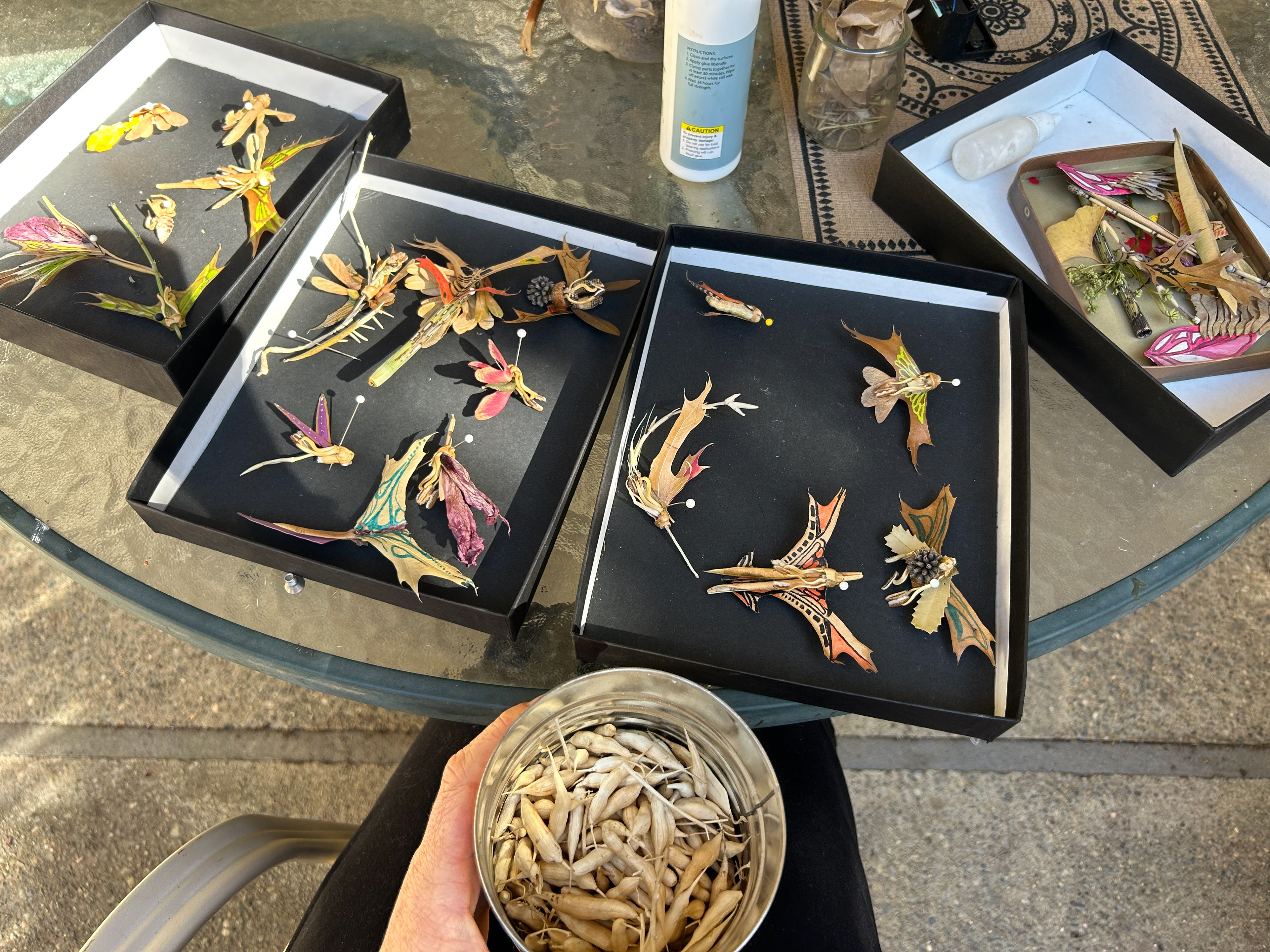
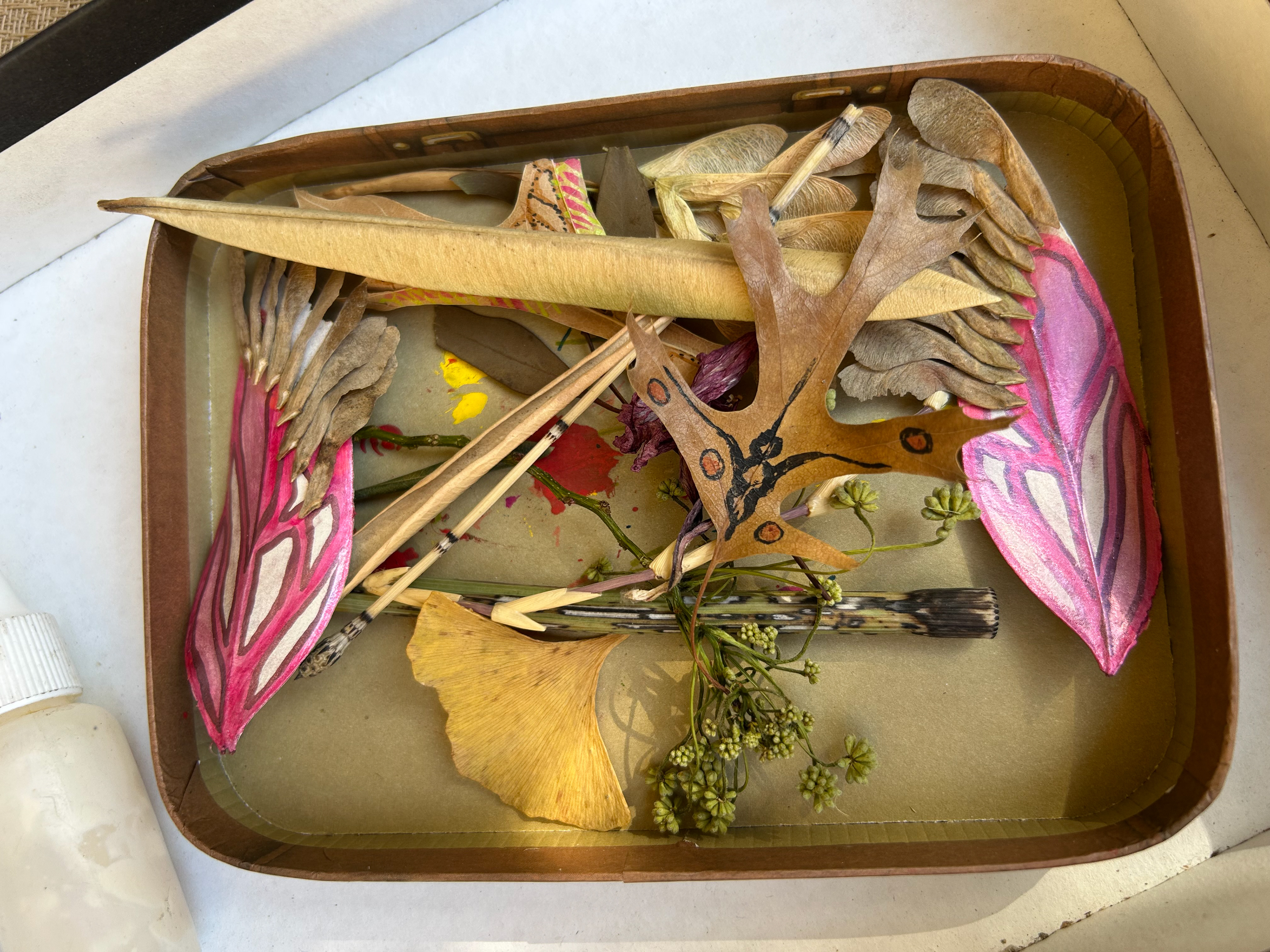
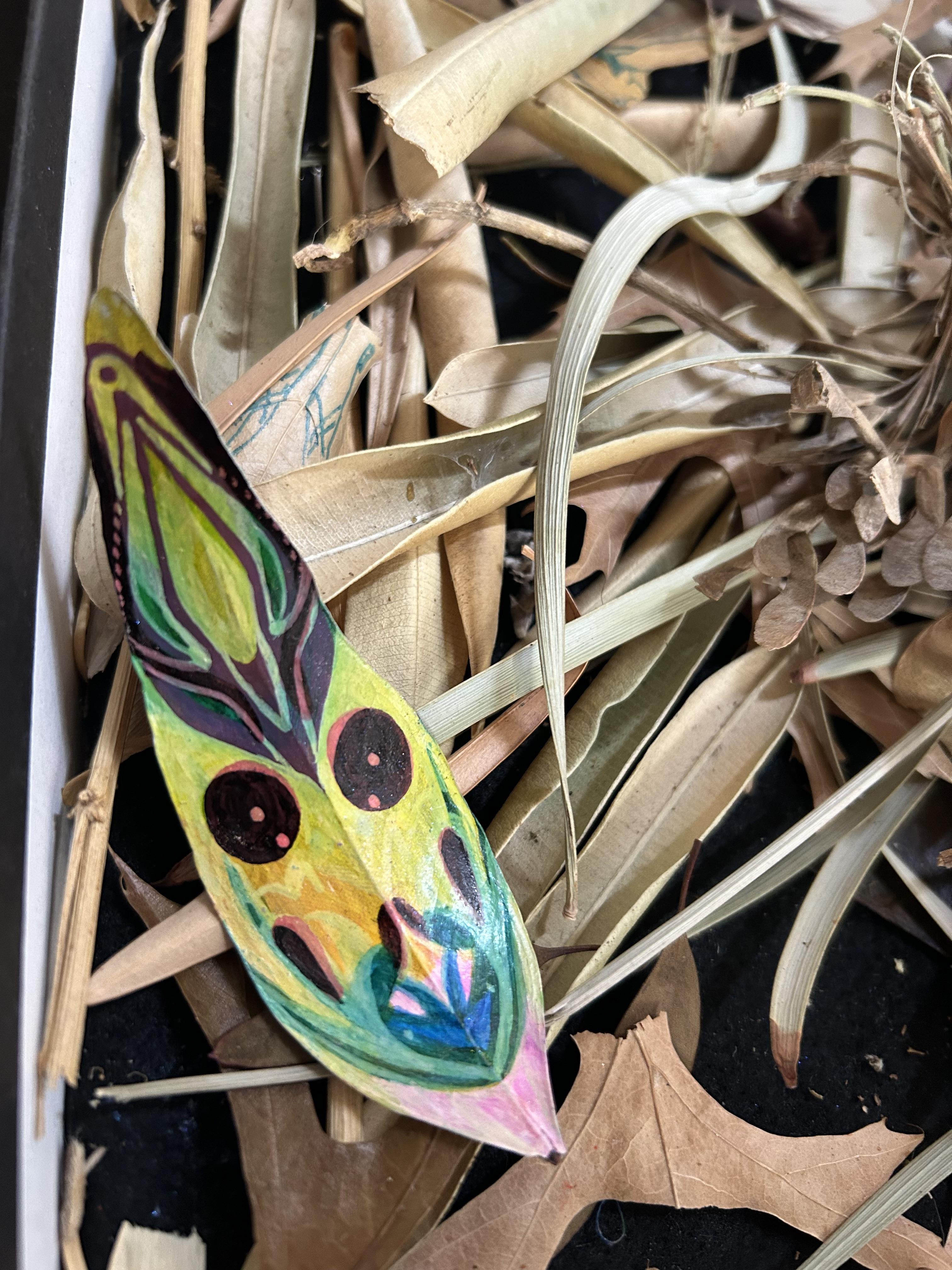
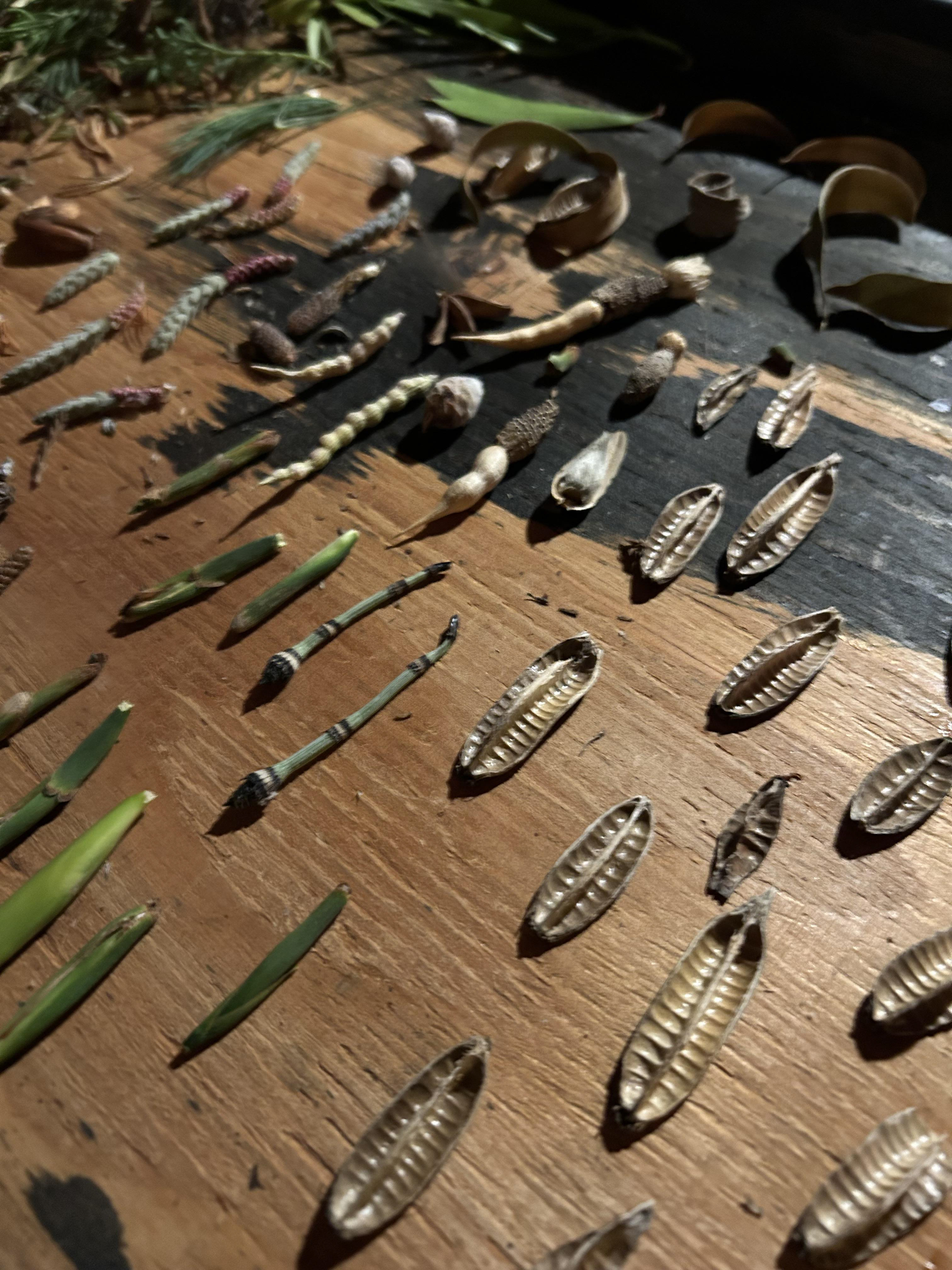
Micro foraging and relationship to the land we've altered
The presence of plant communities and indigenous people in California was dramatically altered and disrespected when colonists arrived here, bringing non native seeds and livestock with them - and that was just the start. Many industry professionals have also since introduced many other species into the landscape, both urban and wild. Many of the plants used in these bugs are horticultural plants that are not native to California, found on sidewalks, yard waste piles, received as offerings from people, traded for money or other resources, etc. The seeds they hold within them are mostly non native, and some invasive - a reminder the responsibility of our role and ability to impact the land.
Ecological Concepts
Biodiversity as magic. Biomimicry. Seed banks. Ecotypes. The intermittent disturbance hypothesis. Propagation. Dormancy. Aging and decay. Declining insect populations as a result of climate change.
A "seed bank" - has two different definitions. One is a human made vault where seeds are stored for generations to preserve the genetics of plants across long periods of time. The other type of seed bank is the one ever-present underground, consisting of dormant seeds that may remain that way indefinitely until the right conditions nurture them into germination.
An "ecotype" is also a concept explored which defines each organism as a uniquely genetic individual, adapted to the environmental conditions and stresses it is grown in. Each collection of Seed Bank Bugs is representative of the location the plants were collected, and although these are not wild genetics, the locality of the materials serves as a representation of what an ecotype "evolved" from a specific place might be.
Some wild brainstorming topics:
1.What is manipulation? Generally, and using the elements on earth, and what defines it as right or wrong?
2.How can cross industry collaboration help us achieve a circular economy?
3.How can scale and impact be consistently mitigated for within industry resource extraction?
4.What should be the limits and bounds of the means of production?
5. With the absurd and bizarre amount of different ways animals and insects reproduce, how can we learn from them to help keep our species alive and thriving?